Accident towing in Auckland: what to confirm
Arrange accident recovery in Auckland with clear location, vehicle and receiving details. Confirm responder or insurer instructions and the towing scope.
After a crash in Auckland, deal with immediate danger before arranging a tow. Call 111 if life is at immediate risk or emergency help is needed. Tell the operator if anyone is injured, the vehicle blocks traffic or emergency services are already attending. Follow the attending responders’ instructions.
This guide covers the recovery information and arrangements to confirm. For official crash responsibilities, consult the NZTA Road Code crash guidance.
Wait safely and report the location
Do not stand in traffic, direct passing vehicles or move around the car to collect photos when it is unsafe. A motorway scene needs particular care; the motorway safety and location guide explains conditional waiting advice and how to describe the road, direction and stopped position.
Police’s *555 guidance covers urgent road incidents without a life-threatening emergency, including non-injury crashes and highway obstructions. Use 111 for an emergency.
Confirm who is arranging recovery
If Police or another responder has arranged removal, ask who is handling it, where the vehicle will go and whom to contact afterwards. Follow the directions given at the scene. Tell any operator you contact about arrangements already underway.
If an insurer is involved, ask what towing approval and destination apply to your claim, who should book the recovery and how payment will be handled. Request confirmation before assuming a chosen operator or onward move will be covered.
For a direct enquiry, explain the scene and vehicle condition. Drive1 provides accident recovery across Greater Auckland; dispatch depends on the actual job, safe access and availability. Confirm the proposed arrangements during the call.
Share what you know about the vehicle
Useful details for the tow operator include:
- Road, direction, nearby junction or exit, and stopped position
- Make, model and number plate
- A short description of the impact
- Visible wheel, steering or body damage
- Whether airbags deployed or fluid is visible
- Whether the car rolls or steers, if already known
- Any responder or insurer instructions
- The proposed receiving destination
Say “unknown” for anything you have not checked. Do not test-drive the car, force damaged controls or go underneath it to fill in this list. Photos can help only when they can be taken safely.
Confirm where the car can be received
The destination needs to match any responder or insurer instructions and have an agreed receiving arrangement. Ask the repairer or other receiving party about access, opening hours, keys and the person accepting the car.
If the vehicle will enter a holding yard, ask that provider about access, collection requirements and charges. Do not assume storage or a second tow is included in the first arrangement. The tow destination guide explains the receiving checks for a workshop, dealer or home.
Keep the agreed details
Keep the operator’s name and contact, destination, quoted work and any insurer reference together. Ask who to contact when the vehicle has arrived. If the destination or vehicle condition changes, update the operator and reconfirm the scope and price.
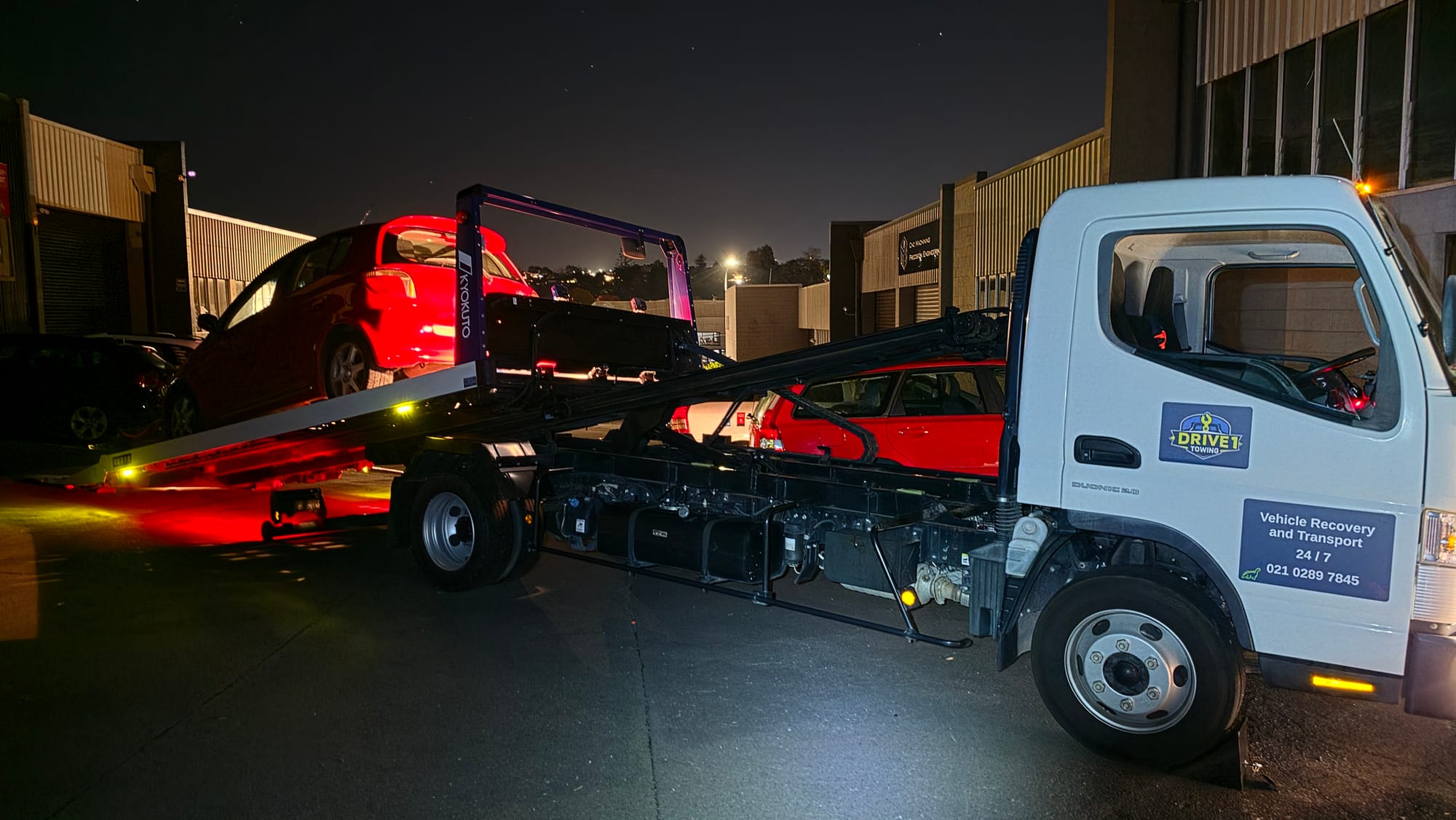
Transport method also depends on the exact vehicle and damage. Tell the operator about model-specific transport instructions and any known locked wheels or access limits. The flatbed guide explains the questions to ask.
For Drive1 assistance, call 021 0289 7845 and begin with the location and safety situation. For a planned onward move after the scene is cleared, use the quote form. English and Chinese communication is available.
24/7 towing across Greater Auckland.
Direct dispatch from Wairau Valley. Lie-flat flatbed for low and prestige vehicles. English & 中文.
- Breakdown Planning
Labour Weekend from Auckland: make a breakdown plan
Plan who to call, where a disabled car can be received and how passengers will continue before your Auckland Labour Weekend trip on 24–26 October 2026.
- Vehicle Transport
Prestige or classic car transport: a handover checklist
Record condition, model instructions, keys and accessories before moving a prestige or classic car in Auckland, then agree how it will be checked on arrival.
- Roadside help
EV 12V or drive battery: what to report before help
EV not responding or out of charge? Separate low-voltage symptoms from drive-battery information, record warnings and confirm the next stop before transport.