Auckland breakdown guide: when to ask for help
Car broken down in Auckland? Find out what to tell a roadside or towing provider, which vehicle details matter and how to confirm the next step.
If your car breaks down in Auckland, first decide whether you and your passengers are safe. When life is at immediate risk, call 111. Once you can make a call safely, describe the location and the problem to a roadside assistance provider or tow operator. You do not need to diagnose the fault before asking for help.
Start with the roadside situation
Use hazard lights and move away from traffic only if you can do so safely. The AA breakdown safety guide explains how to choose between remaining belted inside and leaving via the side away from traffic to a safe waiting place. Follow the advice that fits the actual scene.
For an urgent road hazard that is not life-threatening, Police provide *555 from mobile phones. Do not stand in traffic or attempt repairs beside moving vehicles. Our motorway breakdown guide gives the fuller waiting and location checklist.
Describe symptoms without testing the car
Tell the operator what happened before the car stopped and what you have already observed. Useful details include a warning light, failure to start, an unusual noise, a flat tyre, visible damage or a leak. Mention any attempts already made to restart or move it.
These observations do not establish a diagnosis. Check the vehicle handbook and get qualified advice about what is safe to do next. If you do not know whether the car rolls, steers or selects neutral, say so. Do not force a control or drive a damaged car to answer a booking question.
Roadside help or towing?
Explain whether you need help assessing a stopped vehicle or need it transported to a confirmed destination. The appropriate response depends on the fault, vehicle and safe access. A phone description may still leave questions for the operator to assess.
For a car that will not start, our flat-battery help or transport guide explains what to report and what to confirm after assistance. If the keys are inside a locked car, use the lockout help guide to separate immediate danger from an ordinary access request.
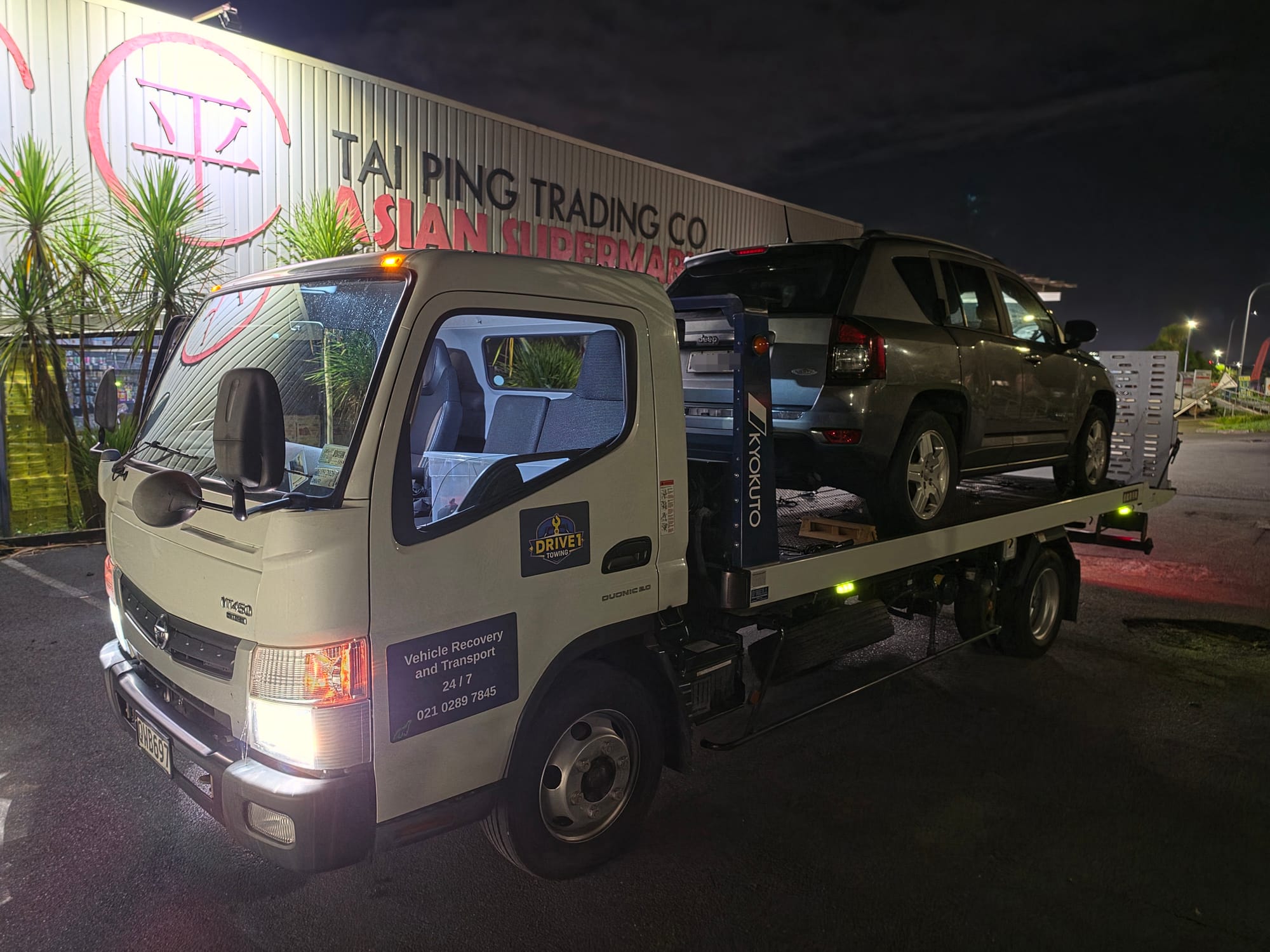
For an EV, low vehicle or a car with locked wheels, mention the exact model and any transport instructions in the owner’s manual. Our flatbed guide explains when to ask about this option without assuming one method suits every vehicle.
If an existing roadside plan or insurer may be involved, contact the provider about its process, approval and payment arrangements. Tell everyone if another operator has already been booked.
Have the job details ready
- Exact pickup location and whether the vehicle is clear of traffic
- Make, model, year and plate
- Known symptoms or damage
- Whether it starts, rolls, steers and selects neutral, or whether these are unknown
- Pickup access and availability of a working key
- Intended destination and who has agreed to receive it
- Whether assistance is needed now or the move can be planned
Send photos only when you can take them from a safe position. For the delivery end, use the home, workshop or dealer guide.
Confirm the quote and arrangements
Drive1 pricing depends on distance, vehicle type, condition, access and timing. Give the job details, confirm the quoted scope and update the operator if anything changes. The Auckland towing quote guide includes a complete request template.
Drive1 provides 24/7 phone and dispatch coverage across Greater Auckland, subject to the job, access and availability. Call 021 0289 7845 for a vehicle stranded now. For a planned move, use the quote form. Out-of-Auckland vehicle transport is by appointment.
24/7 towing across Greater Auckland.
Direct dispatch from Wairau Valley. Lie-flat flatbed for low and prestige vehicles. English & 中文.
- Breakdown Planning
Labour Weekend from Auckland: make a breakdown plan
Plan who to call, where a disabled car can be received and how passengers will continue before your Auckland Labour Weekend trip on 24–26 October 2026.
- Vehicle Transport
Prestige or classic car transport: a handover checklist
Record condition, model instructions, keys and accessories before moving a prestige or classic car in Auckland, then agree how it will be checked on arrival.
- Roadside help
EV 12V or drive battery: what to report before help
EV not responding or out of charge? Separate low-voltage symptoms from drive-battery information, record warnings and confirm the next stop before transport.