Auckland motorway breakdown: safety and location
Broken down on an Auckland motorway? Check where to wait, when to call 111 or *555, and which location details to give the tow operator.
If your car breaks down on an Auckland motorway, put safety first. Use your hazard lights and move as far left, away from traffic, as you safely can. Call 111 if life is at immediate risk. Once you can make a call safely, tell the tow operator the motorway, direction of travel and where the vehicle has stopped.
A location pin helps, but also say whether you are on the motorway itself, an on-ramp or an off-ramp. Those details give the operator a clearer pickup location than a nearby suburb alone.
Choose the safest place to wait
The AA New Zealand breakdown safety guide makes waiting advice conditional on the situation:
- If staying inside is safer, keep seatbelts fastened and sit as far from passing traffic as possible.
- If outside is safer, leave through the side away from traffic, take all passengers and reach a safe area away from the road or behind a barrier.
Do not enter traffic to inspect the vehicle or attempt repairs. In darkness, rain or fog, the AA also advises using parking lights. Follow instructions from emergency responders when they are involved.
When to call 111 or *555
Call 111 for immediate danger to life. If there is an urgent road hazard without a life-threatening emergency, call *555 from a mobile phone to inform Police. The New Zealand Police guidance includes breakdowns and highway obstructions among the incidents reported through this number. It does not work from a landline.
If the vehicle is blocking a traffic lane, say so at the start of the call. A call to a towing business does not replace reporting an immediate danger. Tell the tow operator if Police or another recovery service is already involved so the arrangements can be clarified.
Give the location in this order
Use what you already know or can see from your safe waiting position. Leave uncertain details as unknown.
- Motorway: the road name or state highway number, if known.
- Direction: northbound, southbound, eastbound or westbound. If unsure, name where you were travelling towards.
- Road section: main motorway, on-ramp or off-ramp. For a ramp, give its road or exit name if known.
- Nearest known exit or landmark: say whether you have passed it or are approaching it, following your direction of travel.
- Stopped position: shoulder, traffic lane or another location. Tell the operator if the car is only partly clear of traffic.
- Map pin and callback number: send a pin if you can do so safely, with a phone number the operator can reach.
For example, an enquiry could begin: “SH1 southbound, main motorway, just past the exit I named, on the left shoulder.” Replace each detail with your own location. If you only know the last exit you passed, say that and explain that the distance is uncertain.
A map pin can be hard to interpret where roads run beside or above each other. Keep the road section and travel direction in the message even when you send a pin. If you have moved to a safe waiting place away from the car, explain that the pin marks where you are waiting and describe where the vehicle remains.
Do not walk back to improve the description
You do not need to walk along the motorway to read a sign, measure a distance or photograph damage. Tell the operator what is missing and answer their follow-up questions from a safe position.
If you are unsure whether a wheel rolls or the car selects neutral, say “unknown”. The flatbed towing guide explains which vehicle details matter, including model-specific transport instructions. There is no need to test those things beside moving traffic.
A short message for the tow operator
- Motorway and direction:
- Main motorway / on-ramp / off-ramp:
- Last known exit or landmark, and before or after it:
- Vehicle position and whether any part blocks traffic:
- Where people are waiting and any immediate danger:
- Vehicle make, model, colour and plate:
- Known problem; anything else unknown:
- Map pin and callback number:
- Police or another recovery service already involved:
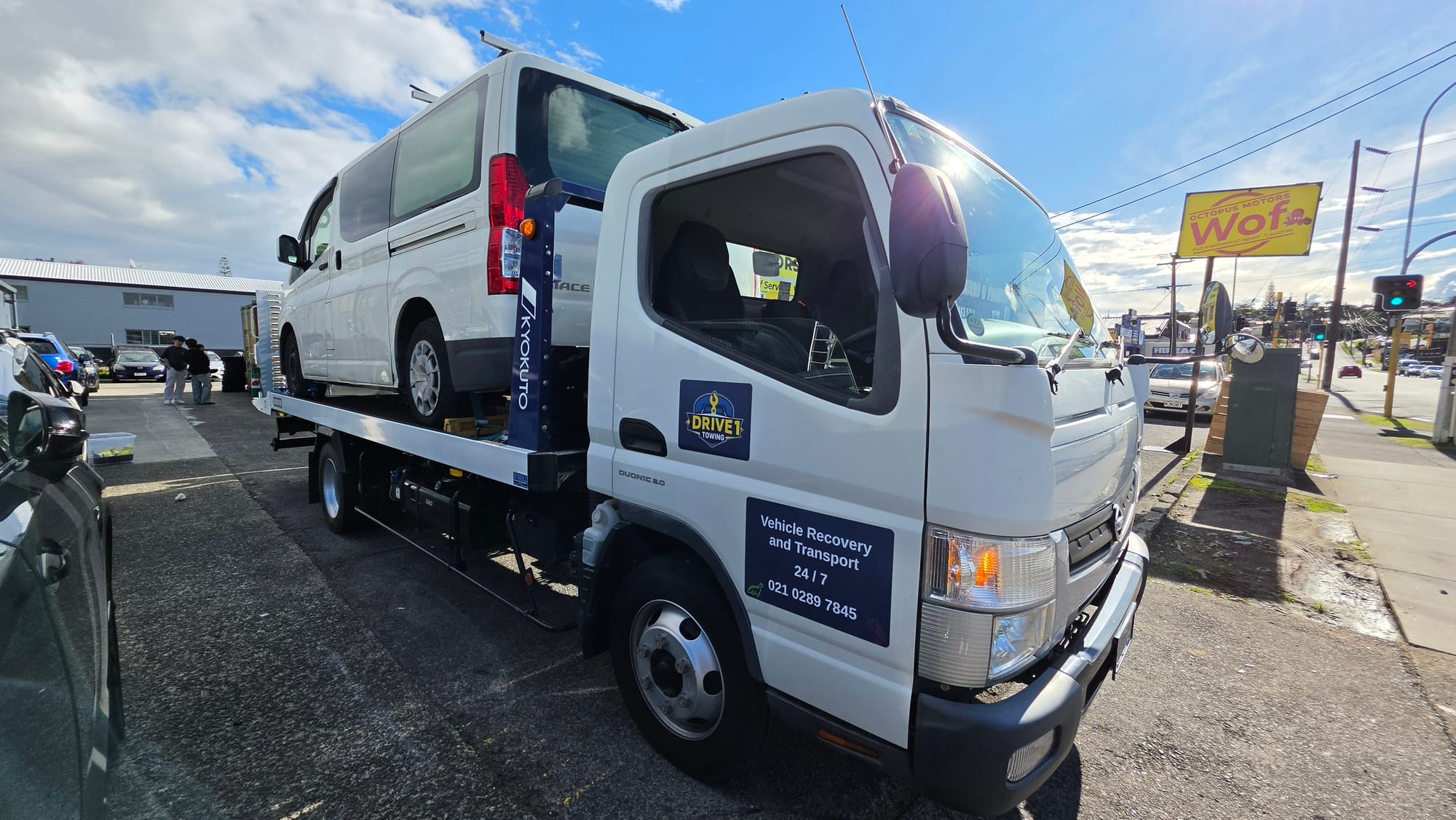
For Drive1 towing assistance, call 021 0289 7845 and lead with the safety situation and location. Dispatch depends on the actual job, access and availability; confirm the arrangements during the call.
Once the immediate situation is being handled, the home, workshop or dealer destination guide can help you confirm where the vehicle will be received. For a vehicle already safely parked with flexible timing, see emergency towing or booked transport.
24/7 towing across Greater Auckland.
Direct dispatch from Wairau Valley. Lie-flat flatbed for low and prestige vehicles. English & 中文.
- Breakdown Planning
Labour Weekend from Auckland: make a breakdown plan
Plan who to call, where a disabled car can be received and how passengers will continue before your Auckland Labour Weekend trip on 24–26 October 2026.
- Vehicle Transport
Prestige or classic car transport: a handover checklist
Record condition, model instructions, keys and accessories before moving a prestige or classic car in Auckland, then agree how it will be checked on arrival.
- Roadside help
EV 12V or drive battery: what to report before help
EV not responding or out of charge? Separate low-voltage symptoms from drive-battery information, record warnings and confirm the next stop before transport.