EV or hybrid will not move: what to send before transport
Prepare the model, manual, key, power and access details for an EV or hybrid that cannot move, so an Auckland transport operator can assess loading.
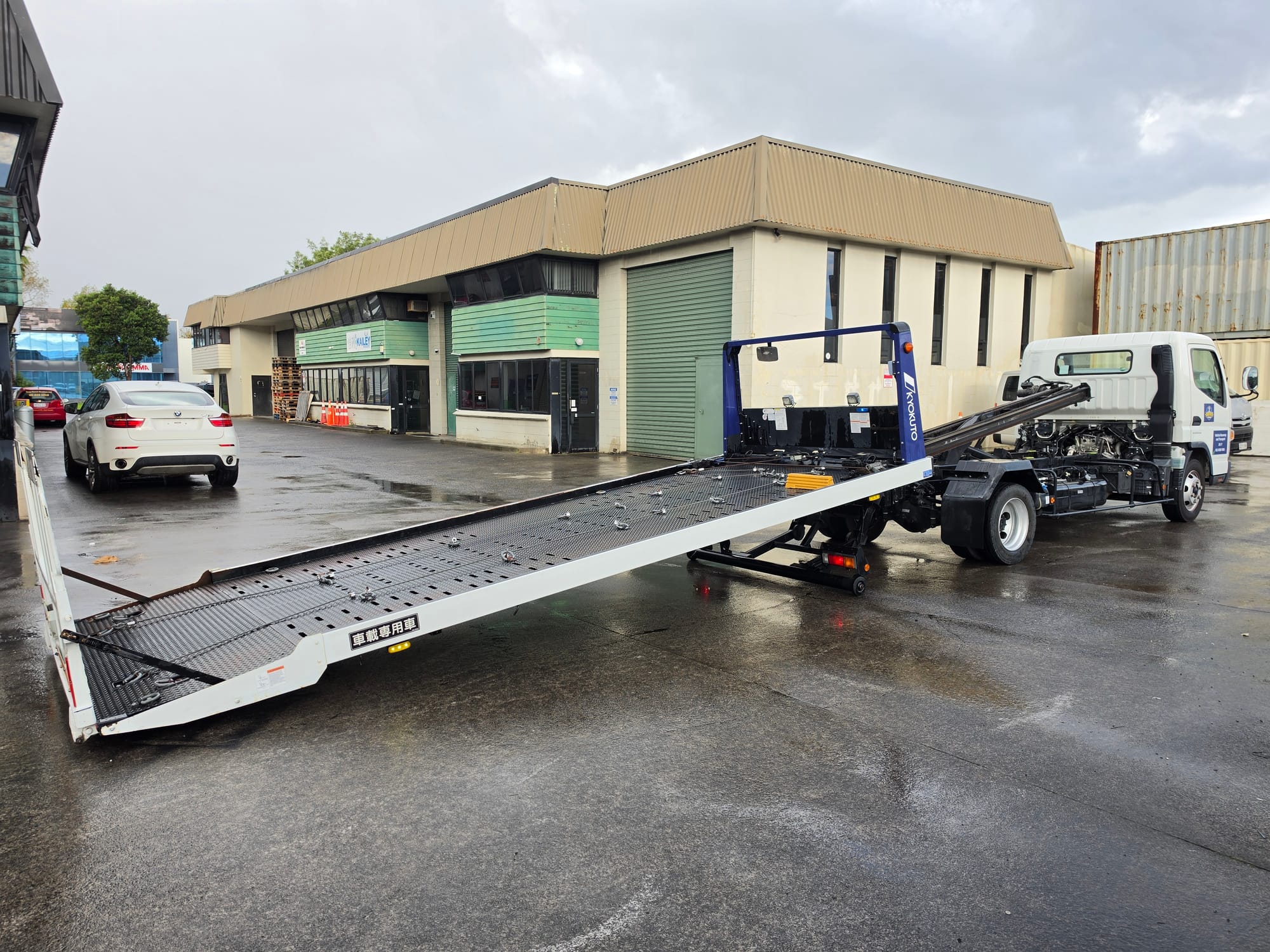
If your EV or hybrid cannot move, send the exact model and year, its recovery instructions, and what you know about keys, power, wheel movement and access before arranging transport. A truck that can carry the car still needs a suitable way to load it. Tell the operator which details are unknown rather than trying to release brakes or force the vehicle to roll.
This guide is about preparing a loading assessment. For choosing roadside help after a no-start, see our flat-battery guide; for the broader choice of transport equipment, read when to ask about a flatbed.
Identify the actual vehicle and manual
Give the make, model, year and variant, and say whether it is fully electric, a hybrid or a plug-in hybrid. Include the drivetrain if known. A photo of the vehicle badge or the relevant manual page can help clarify an uncertain description; avoid sending unrelated personal documents.
Find the handbook section for transporting or recovering a disabled vehicle. Trailer-towing capacity is a different subject. Send the section heading and link or clear screenshots, including its warnings and any conditions for loading. If you cannot find the correct edition, ask the manufacturer or dealer for help.
Ford New Zealand explains how to find a manual using the VIN or year and model. Its recovery-point guidance also directs owners to their own handbook. A procedure for another model, including another hybrid, is not confirmation that it suits your car.
Explain what prevents loading
Use observations you already have, without testing the car by pushing it:
- Is the key, card or usual authorised phone key available?
- Does the display respond, or is it blank? What warning wording is visible?
- Is a charging cable attached? Is there any difficulty releasing it?
- Is the car in Park? Can neutral or a transport mode be selected, or is this unknown?
- Are wheels visibly damaged or locked? Can the steering move, if already known?
- Has the vehicle been in a collision or exposed to floodwater?
A useful description is “screen blank, key card available, parked in a basement, wheel movement unknown”, rather than “needs a normal EV tow”. Do not attempt a generic jump-start, brake release or charging-cable release just to complete the list.
Why the key and power details matter: a Model 3 example
The Tesla Model 3 NZ transport instructions require a detected key and low-voltage power for Tow Mode, with the charger disconnected. They distinguish short loading or repositioning from road transport: Tow Mode does not authorise towing the car down the road. If the mode or touchscreen is unavailable, the manual specifies loading aids such as dollies or tyre skates.
That example explains why “it has some charge” is insufficient information for planning pickup. It does not diagnose which system has failed, prescribe a procedure for other EVs or hybrids, or establish that Drive1 has every loading aid. Tell us the limitation so we can confirm the job requirements before dispatch.
Describe the approach to the car
Send the full location, level and bay, entry height if posted, slope, nearby obstacles and how much space is available around the vehicle. Take photos only when safe. Include a view of the approach as well as the car; a close-up of a warning cannot show whether a truck can reach it.
Our underground-car-park guide covers access details. If there has been collision or flood exposure, report it before discussing loading and seek appropriate emergency or manufacturer advice. Do not handle damaged electrical components. The Tesla instructions specifically warn about high-voltage components after a collision; a vehicle being silent does not establish that it is safe to work on.
Agree on a receiving destination
Tell the operator whether a repairer, dealer or another destination has agreed to accept the vehicle, and provide a contact and opening hours. If the proposed destination is a charger, first confirm with the vehicle’s support provider that this is the appropriate next step; an unresponsive car is not automatically a case of an empty drive battery.
For the receiving arrangements, use our tow-destination guide. Bring together the manual information and the destination before requesting a transport quote.
A message you can adapt
“Vehicle: [make/model/year/variant, EV or hybrid]. Location: [address, level/bay, entry restrictions]. Keys: [available/type]. Display and warnings: [observations]. Charger: [attached/not attached/unknown]. Park, neutral, steering and wheels: [known details/unknown]. Manual: [link or attached section]. Collision or flood exposure: [details]. Destination: [address, receiving contact and confirmation].”
Drive1 provides flatbed and vehicle transport services across Greater Auckland, with out-of-Auckland transport by appointment. Call 021 0289 7845 to discuss a disabled vehicle, or send the details through our quote form for a planned move. Loading method, access and job suitability need confirmation for the actual vehicle.
24/7 towing across Greater Auckland.
Direct dispatch from Wairau Valley. Lie-flat flatbed for low and prestige vehicles. English & 中文.
- Breakdown Planning
Labour Weekend from Auckland: make a breakdown plan
Plan who to call, where a disabled car can be received and how passengers will continue before your Auckland Labour Weekend trip on 24–26 October 2026.
- Vehicle Transport
Prestige or classic car transport: a handover checklist
Record condition, model instructions, keys and accessories before moving a prestige or classic car in Auckland, then agree how it will be checked on arrival.
- Roadside help
EV 12V or drive battery: what to report before help
EV not responding or out of charge? Separate low-voltage symptoms from drive-battery information, record warnings and confirm the next stop before transport.